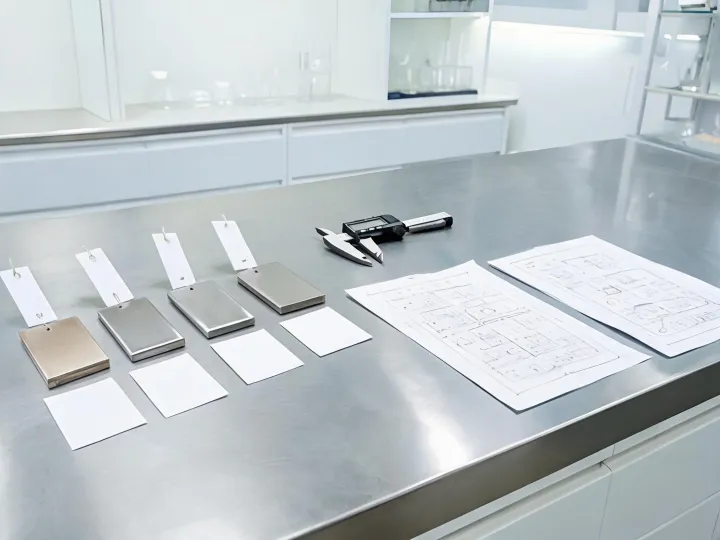
Sample control bench
Representative parts are identified by material, supplier lot, surface condition, geometry, and artwork revision. This prevents a visually successful coupon from being detached from the conditions that produced it.
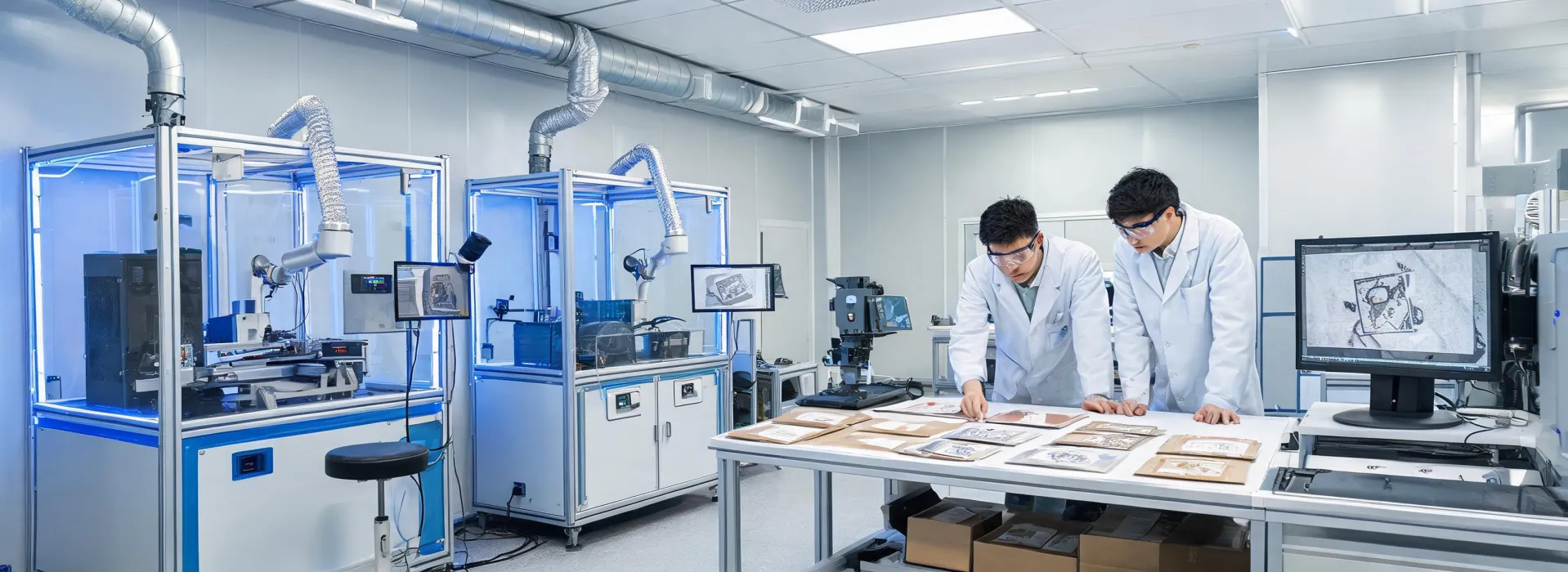
Evidence before specification
This site presents a disciplined route from material sample to controlled production handover. It does not treat a source wavelength, catalog speed, or visually dark mark as proof that an application is production-ready.
Working principle
“A laser selection is complete only when the material response, code acceptance rule, operating window, physical cell, controls, and maintenance boundary are documented together.”
The practical sequence is deliberately plain: identify the actual substrate, define the code, create representative samples, test the process boundary, design the guarded cell, exercise the controls, and repeat the acceptance condition on site. Each conclusion is labeled as observed, supplied by the customer, taken from selected-model documentation, or still awaiting verification.
This conservative evidence policy prevents a common failure mode: a successful bench mark is turned into an unconditional production claim. Surface contamination, material additives, coating lots, focal variation, product motion, ventilation, inspection lighting, and downstream handling can all change the result. Those variables belong in the decision record.
Application evidence stations
No unsupported laboratory size, customer count, installed-base total, or response-time promise is asserted here. The useful question is whether the project has access to the functions needed to create repeatable evidence.
Representative parts are identified by material, supplier lot, surface condition, geometry, and artwork revision. This prevents a visually successful coupon from being detached from the conditions that produced it.
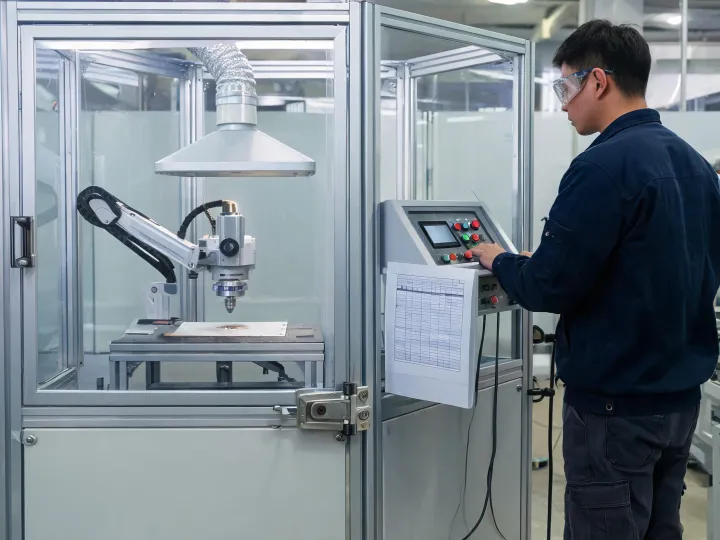
Trials explore both passing and failing settings. Wavelength class, focal distance, lens field, scan strategy, duty condition, and speed are recorded so the recommendation shows margin rather than a single attractive sample.
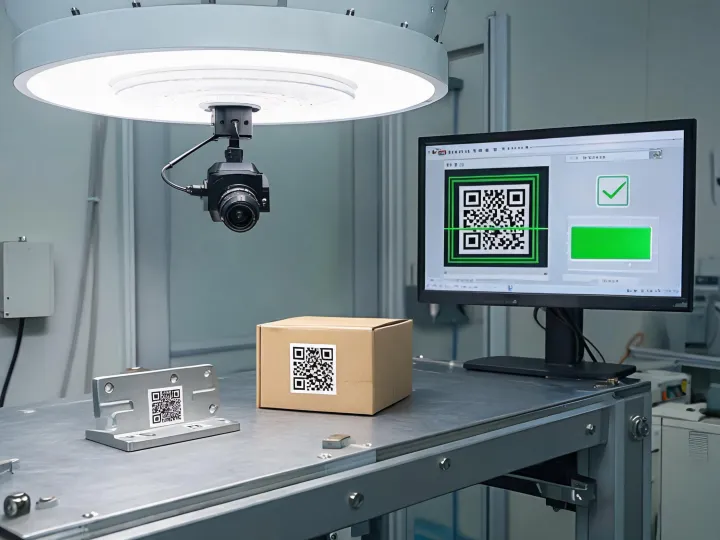
Readability is checked with the agreed camera and lighting approach. Rub, cleaning, condensation, abrasion, or another customer-defined exposure is added when permanence is part of the acceptance rule.
Controlled records
These are project outputs, not generic certificates. Model declarations, safety documentation, and regulatory evidence must come from the selected equipment record and the destination market; they are not inferred from a brand name.
Material, artwork, speed, code-quality rule, exposure method, installation constraints, and unresolved questions.
Test setup, parameter window, sample identification, observed failures, photographs, and acceptance signature.
Guarding, extraction, utilities, trigger, controls, inspection, reject flow, training, maintenance, and open actions.
A useful project conversation can state which claims are demonstrated, which come from selected-model documentation, and which still require a sample or line test.
Open a technical brief